So as you may or may not know, our bees are in trouble. As a gardener and a lover of food (including honey), I thought I would do my part to educate my peeps.
The population of bees and other pollinators is shrinking. It is a world wide phenomenon that has been cause by (you guessed it) us. With our growing population and the continuous development of land, the natural habitats which bees rely on are depleting. Now it is up to us to change this trend and help the bees.
“Buzz off… Why should I care about the bees. All they do is ruin my picnics.”
Actually, if it wasn’t for bees you wouldn’t be having much of a picnic. A majority of the food that we eat relies on bees and other pollinators. Food that relies on bees includes but is not limited to:
Apples
Hay
Mangos
Kiwi Fruit
Plums
Peaches
Nectarines
Rose Hips
Pomegranites
Pears
Strawberries
Onions
Cashews
Cactus
Prickly Pear
Avocados
Kidney Beans
Green Beans
Orchid Plants
Cherries
Celery
Coffee
Walnut
Cotton
Lychee
Flax
Macadamia Nuts
Sunflower Oil
Lemons
Buckwheat
Figs
Limes
Carrots
Cucumber
Hazelnut
Cantaloupe
Chestnut
Watermelon
Coconut
Tangerines
Beets
Mustard Seed
Broccoli
Cauliflower
Cabbage
Brussels Sprouts
Red peppers, bell peppers, green peppers
Papaya
Sesame
Raspberries
Blackberries
Cocoa
Vanilla
Cranberries
Tomatoes
Grapes
So wake up and smell the coffee before the coffee is all gone…
“Hmmm… What a sticky situation. But how am I supposed to help?”
Wild flowers and native flowers are an important part of bee survival. They able to grow just about anywhere due to their ability to grow in most poor soil conditions. Wildflower seeds are available at most garden centers and hardware stores. You can even order them online. Honey Nut Cheerios has also taken it upon themselves to give out free wildflower seeds as part of a Bring Back the Bees campaign that brings awareness to the depleting bee population. Native flowers are flowers that are found locally and can be found in local garden centres. As an alternative to garden centres some nurseries sell locally grown native flowers and wild flowers online.
“I’m still not convinced. I was chased and stung by a bee once and now I hate them!”
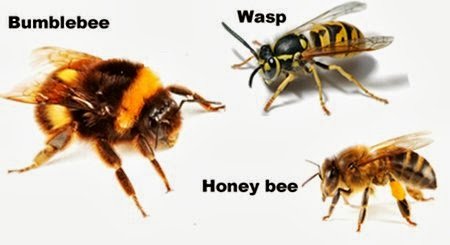
You may have been chased by what you thought was a bee, but in fact was a wasp.
Bees do not generally attack unless provoked, but wasps will come after your chicken leg and sting you if you try and stop them. Wasps are scavengers and predators. They eat other insects and whatever they can find that they might decide is a tasty meal. Bees are strictly looking for pollen and nectar so unless you have a bouquet of flowers, bees are not at your picnic. An easy way to tell them apart is that bees generally look furry in comparison to wasps. They are also more gentle in nature.
“Ok… I get it. Now where do I go to learn more and see bees in action?”
There are obviously a number of places online that you can find more information about bees and how we can help them. If you are interested in getting away from your computer, a more interesting location to find information is at a local honey farm. There are numerous locations around the country that provide tours and let you see the bees first hand. Here are a few that might be in your area:
Chinook Honey Company – chinookhoney.com
Honeyview Farm – Honeyviewfarm.ca
Planet Bee – Planetbee.com
Well that is all I have to say about our pollenator friends. Stay sweet!
 bitsnowlan